
Painting Fillette se voilant - Étienne Dinet | Art print


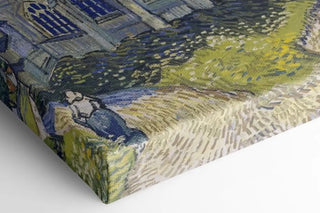
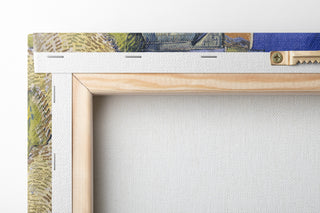
View from behind
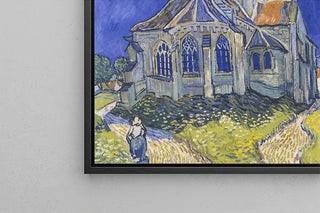
Frame (optional)
In the vast panorama of art history, some works transcend their era to capture the essence of humanity. "Fillette se voilant" by Étienne Dinet is one of those iconic pieces that evoke timeless beauty and rare delicacy. This artwork, both simple and complex, immerses us in a universe where childhood innocence blends with the depth of human emotions. Through the gaze of this girl, Dinet invites us to explore universal themes such as curiosity, beauty, and the quest for self-discovery. The depiction of this fleeting moment, where the child veils herself, becomes a metaphor for the transition between innocence and knowledge—a delicate passage that every human being is destined to cross.
Style and uniqueness of the work
Étienne Dinet's style is distinguished by its intimate approach and its ability to subtly capture light. In "Fillette se voilant," each brushstroke seems to vibrate with a life of its own, revealing a palette of soft colors that evoke a peaceful atmosphere. The composition, focused on the girl, creates an immediate connection with the viewer, as if time had stopped to immortalize this precious moment. Dinet excels in depicting textures, whether it is the light fabric of the veil or the delicate skin of the child. This attention to detail, combined with mastery of light, gives the artwork an almost tactile dimension. The way the veil drapes over the child's face, while revealing a gentle expression, testifies to a rare artistic sensitivity that makes this piece a true masterpiece.
The artist and his influence
Étienne Dinet, a French artist of the early 20th century, distinguished himself through his commitment to representing Algerian culture and landscapes. His fascination with the Orient and his ability to translate this passion into art made him a pioneer in the field of Orientalist painting. Dinet was able to capture not only the beauty of landscapes but also the soul of the people he painted. His encounter with North African cultures profoundly influenced his style, making him
Painting Fillette se voilant - Étienne Dinet | Art print

-10% FROM €95 IN PURCHASES
-15% FROM €195 IN PURCHASES
Regular price
- Unit price
- by
Free shipping
€4.90 / Free shipping on orders over €39
Satisfied or Money Back
Free returns within 30 days
10-year warranty
Our prints are guaranteed for 10 years
Any questions? We are here!
by email to contact@artemlegrand.com
THE STEPS OF YOUR ORDER

STEP 1 - ORDER PLACED
Your order has been confirmed and we are starting production
STEP 2 - SHIPPING
We ship your order. We send you an email to track the progress

STEP 3 - DELIVERY
You receive your order. You can also, according to your choice, be delivered to a relay point.
Matte finish
View from behind
Frame (optional)
In the vast panorama of art history, some works transcend their era to capture the essence of humanity. "Fillette se voilant" by Étienne Dinet is one of those iconic pieces that evoke timeless beauty and rare delicacy. This artwork, both simple and complex, immerses us in a universe where childhood innocence blends with the depth of human emotions. Through the gaze of this girl, Dinet invites us to explore universal themes such as curiosity, beauty, and the quest for self-discovery. The depiction of this fleeting moment, where the child veils herself, becomes a metaphor for the transition between innocence and knowledge—a delicate passage that every human being is destined to cross.
Style and uniqueness of the work
Étienne Dinet's style is distinguished by its intimate approach and its ability to subtly capture light. In "Fillette se voilant," each brushstroke seems to vibrate with a life of its own, revealing a palette of soft colors that evoke a peaceful atmosphere. The composition, focused on the girl, creates an immediate connection with the viewer, as if time had stopped to immortalize this precious moment. Dinet excels in depicting textures, whether it is the light fabric of the veil or the delicate skin of the child. This attention to detail, combined with mastery of light, gives the artwork an almost tactile dimension. The way the veil drapes over the child's face, while revealing a gentle expression, testifies to a rare artistic sensitivity that makes this piece a true masterpiece.
The artist and his influence
Étienne Dinet, a French artist of the early 20th century, distinguished himself through his commitment to representing Algerian culture and landscapes. His fascination with the Orient and his ability to translate this passion into art made him a pioneer in the field of Orientalist painting. Dinet was able to capture not only the beauty of landscapes but also the soul of the people he painted. His encounter with North African cultures profoundly influenced his style, making him